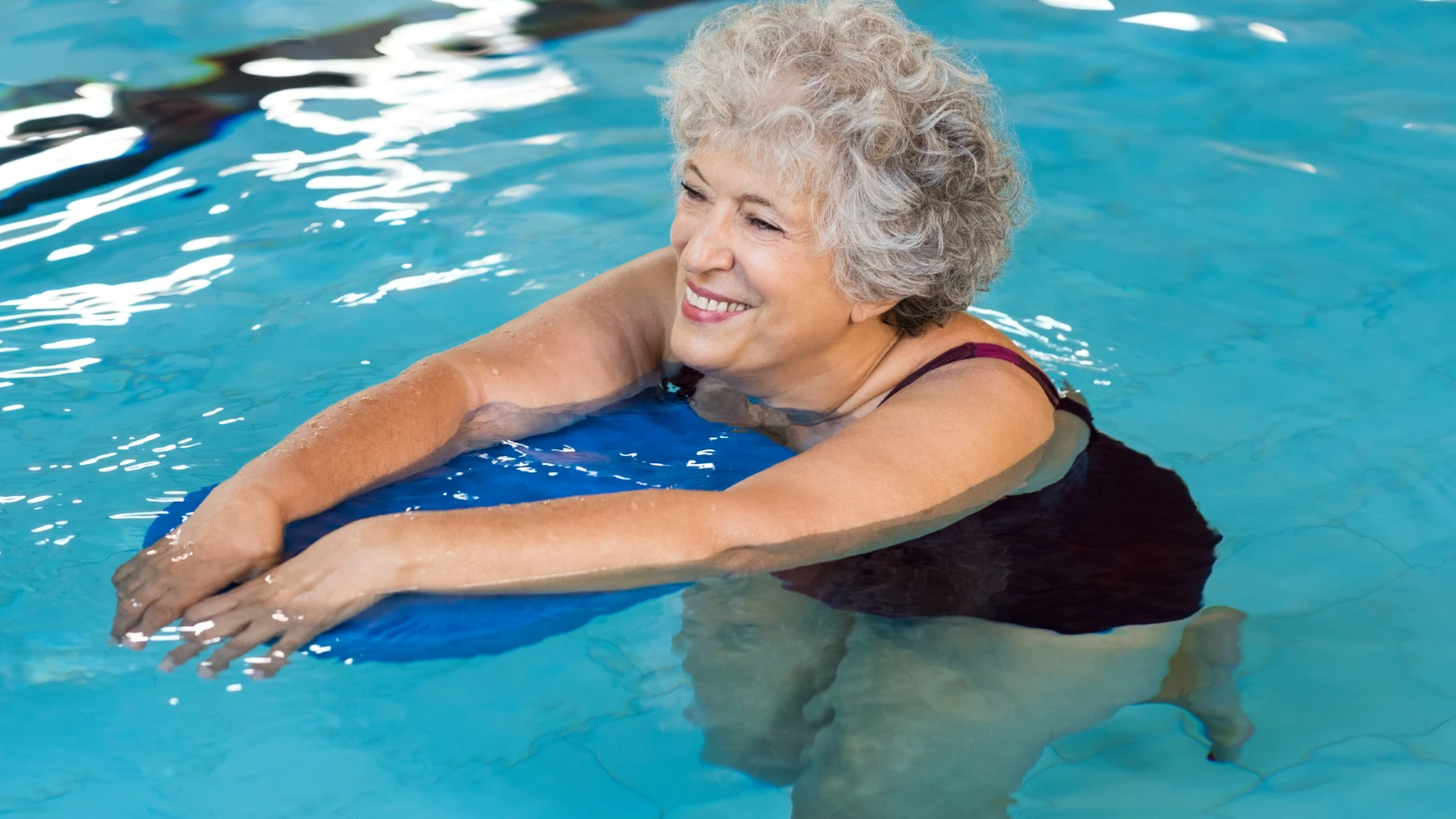
Water aerobics is a type of exercise performed in a swimming pool. It combines simple movements with the resistance of the water and can be adapted to different levels of fitness.
For people who find some land-based activities uncomfortable or demanding, exercising in water can be an interesting alternative. The water supports the body while providing resistance as you move, allowing you to stay active without putting the same amount of impact on your joints.
What Is Water Aerobics?
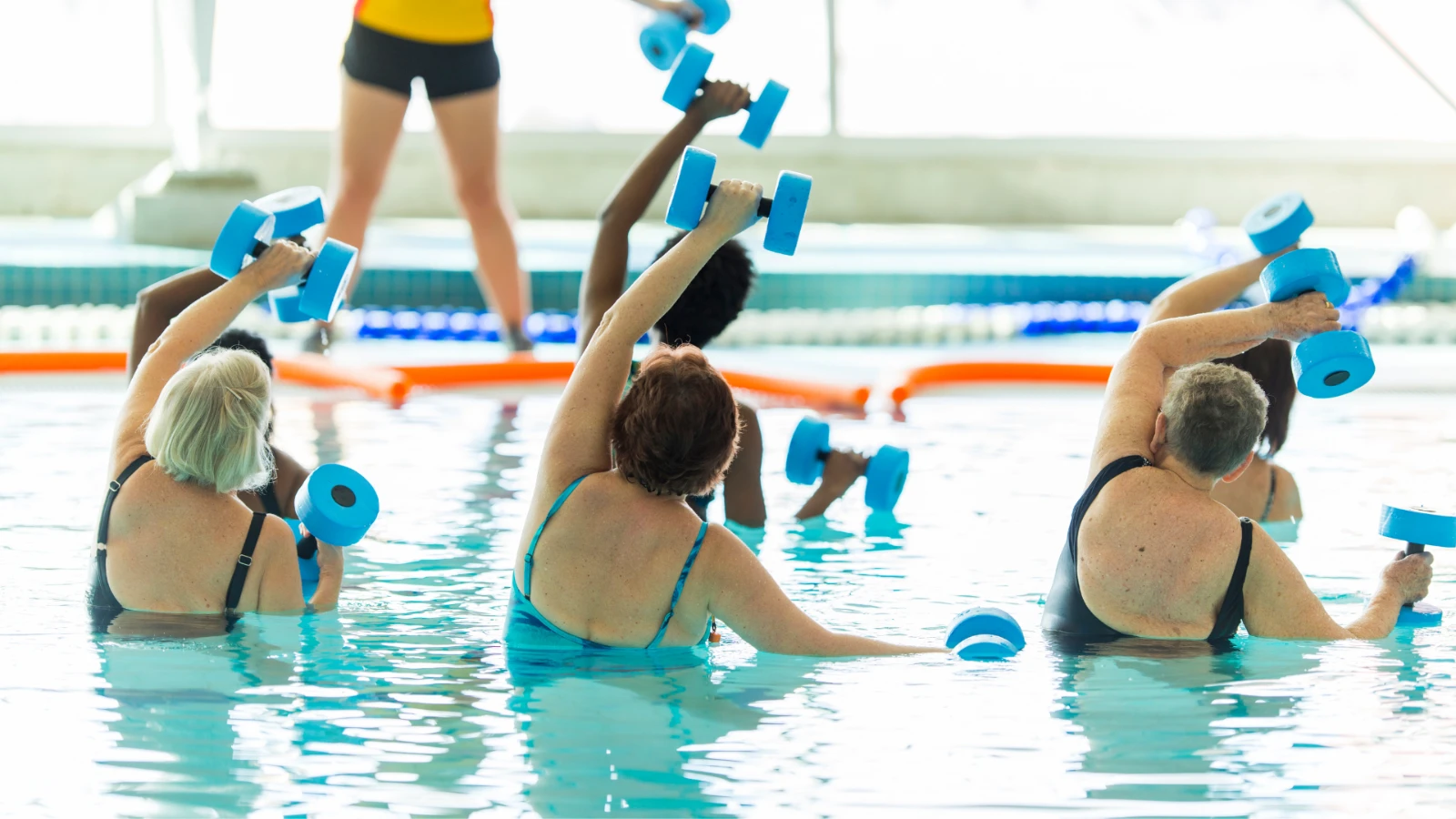
Water aerobics usually involves a series of movements performed while standing in shallow water. Depending on the class or exercise programme, activities can include walking, lifting the legs and arms, gentle stretching, or more energetic movements.
Unlike swimming, you do not need to coordinate your breathing with strokes or keep your face underwater. This can make water aerobics a more accessible option for people who find swimming and breathing at the same time difficult.
The intensity can also be adjusted. You can move more slowly, take breaks, or reduce the range of your movements depending on how you feel.
How Does Exercising in Water Work?
Water creates resistance against your movements. When you move your arms or legs through the water, you have to work against that resistance.
At the same time, the water can support some of your body weight. This combination can make certain exercises feel different from performing the same movements on land.
For people with respiratory conditions, this may provide another way to include physical activity in their routine without relying exclusively on activities such as running or fast walking.

Take the next step in managing your respiratory health.
With Breathment, you can keep track of your symptoms, monitor your breathing, and build a better understanding of how you feel from day to day.
Water Aerobics and Breathing
Breathing remains important during any physical activity. When exercise becomes more intense, you may notice that you breathe faster or feel more short of breath.
With water aerobics, you can usually control the pace of your movements more easily than during continuous swimming. This means you can slow down or pause when you need to.
Try to avoid holding your breath while exercising. Instead, focus on maintaining a comfortable and regular breathing pattern.
If you notice that your breathing is becoming increasingly difficult, reduce the intensity or take a break.
Can Water Aerobics Help People with COPD?
People with COPD may experience symptoms such as breathlessness and fatigue during physical activity. Because of this, choosing an activity that can be adjusted to their individual abilities is important.
Aquatic exercise has been explored as an option for people with COPD. Some clinical research has looked at water-based exercise programmes and their potential role in physical activity and exercise training.
However, water aerobics is not automatically suitable for everyone with COPD. The appropriate intensity depends on the individual, their symptoms, and their current level of fitness.
If you have COPD and are considering starting a new exercise programme, discussing it with a healthcare professional can help you determine what is appropriate for you.
Understanding how
COPD symptoms can affect water activities can help you choose an appropriate pace.
Tips for Getting Started
You do not need to start with a demanding class. If you are new to water aerobics, begin with gentle movements and give yourself time to become comfortable in the water.
A few simple things can make the experience easier:
- Start with a low intensity and increase it gradually.
- Take breaks whenever you need them.
- Choose a class or activity that matches your current abilities.
It can also help to tell the instructor about any breathing difficulties before the session. They may be able to suggest modifications or lower-intensity alternatives.
Water Aerobics or Swimming?
Both activities can provide an opportunity to stay active, but they involve different types of movement.
Swimming requires you to coordinate strokes with your breathing and usually involves periods where your face is in the water. Water aerobics is generally performed upright, allowing you to breathe normally while moving.
If swimming feels uncomfortable because of breathing difficulties, water aerobics may be an alternative to explore. The important thing is to choose an activity that you can perform comfortably and consistently.
Swimming is another way to stay active in the water, but
breathing while swimming can require a different approach.
Final Thoughts
Water aerobics can be a simple way to add movement to your routine while exercising in a supportive environment. Its intensity can often be adjusted, making it possible to start gently and progress at your own pace.
For people with respiratory conditions, the most suitable activity will depend on individual circumstances. Start gradually, pay attention to your breathing, and take breaks when needed.
If you are unsure whether water aerobics is appropriate for you, speak with a healthcare professional before beginning a new exercise routine.

 Julia Haak