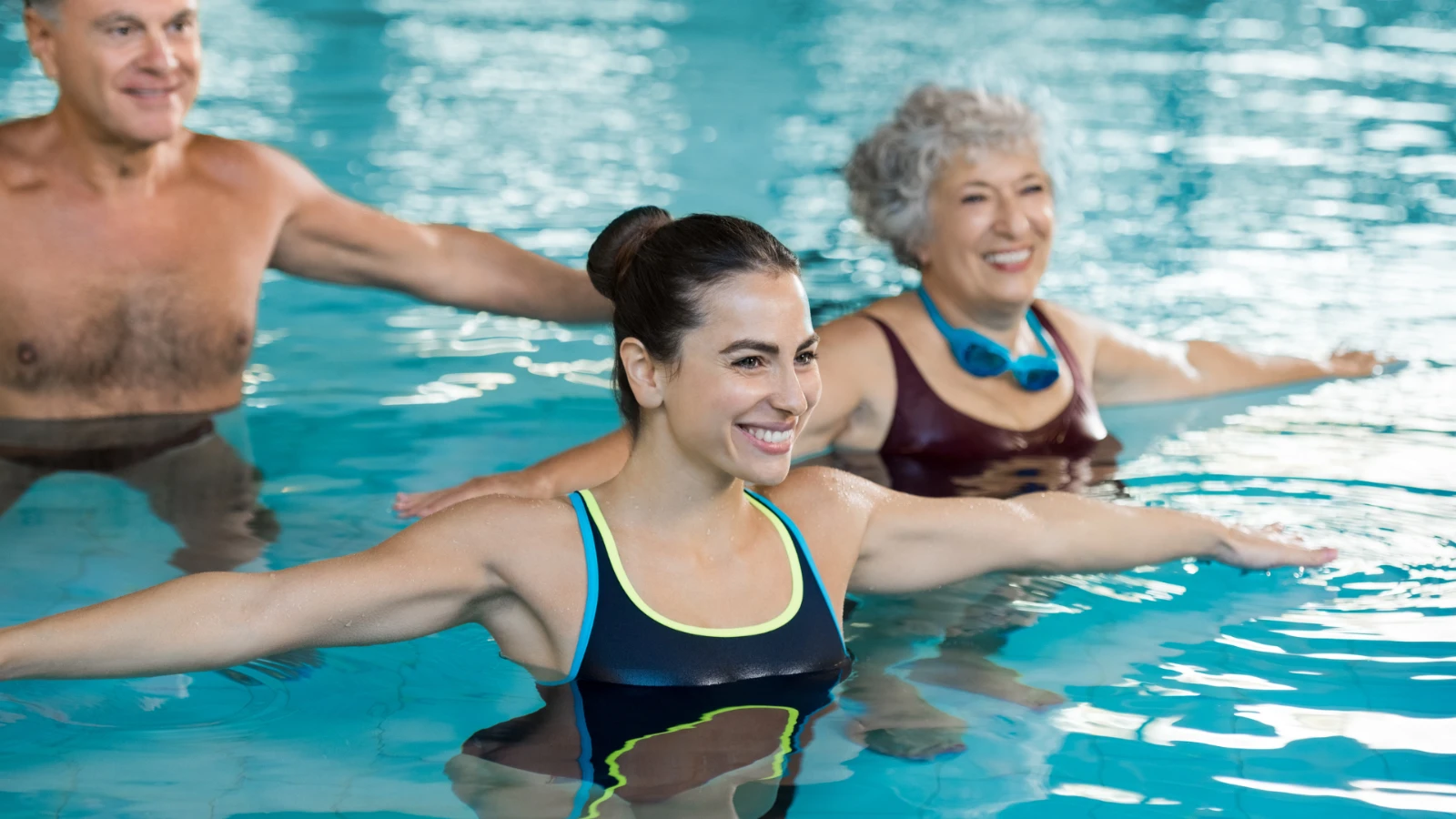
Physical activity can sometimes make COPD symptoms more noticeable. This can be especially important during water activities, where breathing and movement may feel different from exercise on land.
Understanding how your body responds can help you choose an appropriate pace and recognise when it is time to slow down or take a break.
How COPD Symptoms Can Affect Exercise
COPD can cause symptoms such as breathlessness, coughing, and fatigue. During physical activity, these symptoms may become more noticeable as your body needs more oxygen and your breathing rate increases.
The intensity of symptoms can vary from person to person. An activity that feels comfortable for one person may feel more demanding for another.
This is why it is useful to focus on your own breathing and energy levels rather than comparing your performance with other people.
COPD Symptoms and Water Activities
Being in water can change how exercise feels. Activities such as swimming, water aerobics, or walking in a pool involve resistance from the water, which can make your muscles work harder.
Swimming can also require you to coordinate your breathing with your strokes. For someone who already experiences breathlessness, this additional coordination may make the activity feel more challenging.
Water-based exercise does not necessarily need to be strenuous. Gentle movements and shorter periods of activity can be used as an alternative to more demanding exercise.
Signs That You May Need a Break
It is normal for breathing to become faster during physical activity. However, you should pay attention to significant or worsening symptoms.
During exercise, consider slowing down or taking a break if you experience:
- Increasing or uncomfortable breathlessness
- Unusual fatigue or weakness
- Symptoms that are not settling after reducing the intensity
Taking a break does not mean that you have failed. Rest is a normal part of managing your activity level.

Want to understand your symptoms better?
Breathment helps you keep track of your symptoms and breathing over time, giving you a clearer picture of your respiratory health.
How to Manage Your Pace
One of the simplest ways to make water activities more manageable is to control the intensity.
Instead of trying to complete a long session immediately, start with shorter periods of activity. Allow yourself time to rest between exercises and gradually increase the duration as you become more comfortable.
You can also choose activities that allow you to control your movements. Walking through shallow water or doing gentle water aerobics may give you more control over your pace than continuous swimming.
What About Breathing During Swimming?
Swimming can require more attention to breathing because you cannot breathe freely in the same way as when exercising on land.
You may need to coordinate each breath with your strokes, which can make the activity feel demanding if you are already experiencing breathlessness.
If this happens, slowing down or switching to a different water-based activity may make the session more comfortable.
If swimming makes your breathing feel uncomfortable, these
tips for managing breathing problems while swimming may help.
When Should You Stop Exercising?
Knowing when to stop is an important part of exercising safely.
If your symptoms become significantly worse or do not improve after resting, stop the activity and seek appropriate medical advice. If you regularly experience difficulties during exercise, speak with a healthcare professional about how you can adapt your activity routine.
People with COPD can have very different levels of fitness and symptoms, so there is no single amount of exercise that is appropriate for everyone.
Making Water Activities More Comfortable
A few simple habits can help you manage your activity:
- Begin with a gentle warm-up.
- Increase the intensity gradually.
- Take regular breaks.
- Pay attention to how you feel during and after the activity.
It can also be helpful to choose an activity that matches your current abilities. You do not have to swim continuously to benefit from being active in the water.
Water aerobics can be another option for staying active while having more control over your pace.
Final Thoughts
COPD symptoms can influence how comfortable different water activities feel. Breathlessness and fatigue may become more noticeable as the intensity of exercise increases, particularly during activities such as swimming.
The best approach is to start gradually, control your pace, and pay attention to how your body responds. Water aerobics, walking in the pool, and other gentle activities can provide alternatives if swimming feels too demanding.
If you are unsure which type or intensity of water activity is right for you, talk to a healthcare professional before starting a new exercise routine.


 Julia Haak